

Rajiv Malhotra

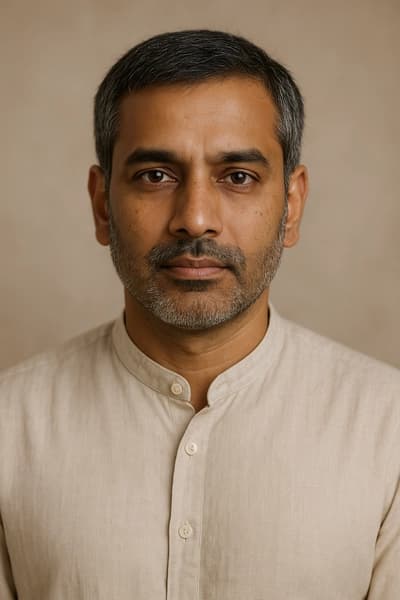
Location: New Delhi, India
Rajiv Malhotra is a scholar of Vedantic philosophy and meditative psychology, renowned for his insightful approach to non-dual awareness and ancient wisdom.
Experience
Rajiv has taught and written about mind-body integration and consciousness for 20 years, guiding students worldwide in deep contemplative practices.
Education
Ph.D. in Philosophy of Mind, Jawaharlal Nehru University
Advanced Certification in Yoga Psychology
Posts


Simplicity as Practice: Minimalism in Zen and Taoist Living
In the hush of morning, simplicity is not an absence, but a kind of presence—a clearing in the woods of the mind.

Finding the Middle Way: Buddhist Balance for Modern Stress
Daily life pulls us in a hundred directions—work, duty, longing for rest. Here, the middle way offers not escape, but a balanced path under the constant winds of modern stress.

Resilience Through Modern Mindfulness: Meeting Adversity With Quiet Strength
When life feels unpredictable or heavy, resilience isn’t just a trait—it is a practice shaped by presence. Through modern mindfulness, we discover a quieter wisdom within our everyday challenges and learn to stand, like trees touched by wind, unbroken.

Stoicism and Mindfulness: Two Philosophies, One Path to Calm
If the world outside feels wild or unsettled, two ancient practices—Stoicism and mindfulness—offer a way back to ground. Here, the mind learns to meet each day with quiet steadiness, rooted in breath and guided by wisdom.

Aristotle, Virtue Ethics, and the Landscape of Mindful Living
Many of us sense the quiet longing to be truly well—not just in fleeting moods, but in a steady way beneath life’s shifting surfaces. Aristotle’s vision of virtue, rooted in eudaimonia, invites us to inhabit each moment with attention and care, echoing what mindful living asks of us here and now.

Phenomenology of Awareness: Beyond Mindfulness Into the Foundation of Experience
When you pause and listen, what do you notice first? Beneath sensation and thought lies a quieter background—a simple awareness, tender and unadorned. This is where our inquiry begins: with the direct experience of being aware.