

Rajiv Malhotra

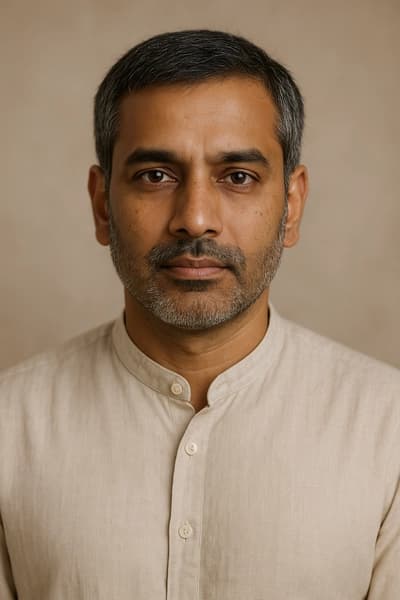
Location: New Delhi, India
Rajiv Malhotra is a scholar of Vedantic philosophy and meditative psychology, renowned for his insightful approach to non-dual awareness and ancient wisdom.
Experience
Rajiv has taught and written about mind-body integration and consciousness for 20 years, guiding students worldwide in deep contemplative practices.
Education
Ph.D. in Philosophy of Mind, Jawaharlal Nehru University
Advanced Certification in Yoga Psychology
Posts


Depth of Experience: How Mindfulness Reveals Life’s Quiet Layers
What if every moment holds more than we first sense? Mindfulness can become a lantern, casting gentle light into the hidden layers of perception, letting the subtle textures of our lives come forward.

Early Buddhist Texts: Returning to the Roots of Mindfulness
When we listen inwardly, something ancient stirs beneath our modern longing for mindfulness. The earliest Buddhist texts, grounded in earth and breath, offer a living wellspring of wisdom that endures beyond fleeting trends.

Interconnectedness in Mindfulness: Awakening to a Wider View
Sometimes the world feels distant — as if the self is a small island, surrounded by tides of thought and habit. Here, we begin to listen for the quiet threads that bind us, awakening a perception as wide as the sky above and as quietly certain as the roots below.

Faith as Virtue: Shaping Awareness Through Mindfulness and Spiritual Tradition
Faith is not only a belief, but a living presence — something felt in the quiet center of change and uncertainty. Within both mindfulness and spiritual paths, faith unfolds not as doctrine, but as a subtle, steadying rhythm beneath thought.

Modern Ethics — Where Duty and Happiness Meet Mindfulness
How do we find a good life in a restless world? Beneath debates of duty and happiness, modern ethics lives, breathing quietly through our daily choices and the pulse of mindful presence.

Phenomenological Meditation: Steps Into Direct Seeing
We enter the threshold of meditation not by escaping experience, but by turning toward it—directly, quietly. Phenomenological practice invites us to notice what is truly here, before words or judgments arrive, revealing the clear shape of presence itself.