

Vedanta, Yoga, and Western Consciousness: Mapping the Inner Terrain

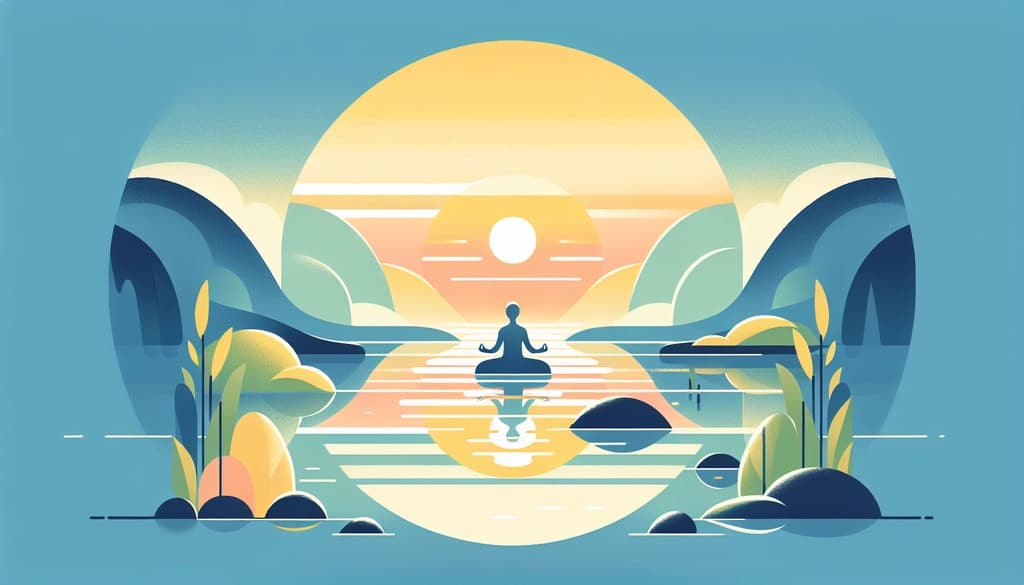
There are mornings when consciousness feels as clear as light on water—effortless, boundless. And there are days when it arrives heavy, thick as the shadows in an old forest. We come asking: what is this awareness that moves through us, both intimately ours and somehow larger than what we can name?
To appreciate the comparative insights in this article, it's helpful to first familiarize yourself with Vedantic and Yogic perspectives on consciousness. This foundation lets each tradition’s perspective feel more like a living inquiry than a list of ideas.
Within the long arc of human inquiry, Vedanta, Yoga, and Western psychology each offer their maps. They speak in different tongues—one poetic with ancient Sanskrit, another practical in movement and breath, the last analytic and analytic, searching for neurons and patterns. But all start from the wonders and questions of what it means to be conscious at all.
Listening to Awareness: Three Voices, One Mystery
Vedanta whispers: you are not the waves of thought or the currents of feeling, but the ocean beneath them—timeless, witnessing, whole. Yoga guides us home to the body and breath, teaching that consciousness is revealed through disciplined attention, through union and letting go. Western models ask: is consciousness produced by the brain, or does it reach beyond? Here, awareness flickers across synapses, or emerges as a pattern—nothing stays fixed for long.
Examining the non-dual framework of Advaita Vedanta enriches any comparison between Eastern and Western models of consciousness, inviting us to consider how boundaries between self and other are drawn—or dissolved.
Comparing the Pathways: What Do You Find When You Look Within?
- Vedanta sees consciousness as a boundless, indivisible presence—called Atman or Brahman—behind all appearance.
- Yoga approaches with practice: movement, breath, meditation. The mind becomes more transparent, and consciousness seems revealed yet dynamic.
- Western psychology and philosophy often define consciousness as awareness generated by or emerging from neural patterns, framing it as both a scientific puzzle and a lived experience.
The differences between classical and contemporary yoga consciousness offer further layers to the comparison with Western views—each shift in practice and philosophy revealing a new shade of awareness.
As the seasons shift, so do our ways of understanding. There’s a time for theory, a time for direct feeling, and moments when language drops away. Perhaps each tradition holds a mirror at a different angle—what do you see reflected in your own experience?
Practice: Sensing the Subtle Differences
Let this be an invitation—walk the forest path, pause beside the water. Welcome curiosity into the quiet spaces between thoughts. How does your awareness shift with each breath, each gentle inquiry?
Insights from Western models are enriched when placed alongside meditation techniques for expanding consciousness. Allow these approaches to illuminate one another as you reflect.
Sometimes awareness is a vast sky; other times, a flickering candle. When we let each tradition inform the other, a deeper, richer field emerges—one in which both clarity and doubt have their season.
Walking Between Worlds: Toward a Living Synthesis
Comparative studies benefit from exploring yoga's integration with contemporary neuroscience in the context of consciousness. These dialogues reveal new thresholds between embodiment, mind, and the world.
The evolution of yogic consciousness in modern times is critical to understanding the interplay between Eastern and Western models, showing how ancient teachings are constantly reimagined and embodied.
For additional background, consider how Western philosophy’s approach to mindfulness provides a unique context for this comparative study—offering yet another facet through which to explore self and awareness.
Let your next breath be a gentle doorway. Awareness is not so much found as revealed—like light on the shifting surface of a lake, or the hush of morning after a long night’s questions. We walk, we rest, we wonder; and in each moment, the world within and around us quietly unfolds.
FAQ
You May Also Like

Women Philosophers Who Shaped Mindfulness in the West
Much of what we call mindfulness today blooms from quieter seeds. Here, we trace the lineage of women philosophers whose presence and clarity have woven tenderness, ethical inquiry, and embodied wisdom into the heart of Western mindfulness movements.

Stories from Yogic Texts: Parables of Consciousness and Wisdom
Sometimes the mind seeks not explanation, but a story that sinks quietly to the heart. In these ancient yogic parables, wisdom moves like water—shaping, nourishing, and returning us to the present moment.

Advaita Vedanta and the Quiet Mystery of Non-Dual Consciousness
If you’ve ever sensed that the boundaries between self and world are softer than they appear, you are not alone. Advaita Vedanta invites us into the spaciousness of non-dual awareness—a truth that can be felt in the hush of dawn, or in the silent connectedness between all living things.

Resilience Practices from Yoga: Lessons Rooted in Eastern Traditions
When life’s ground feels less steady, wisdom from yoga and eastern practices offers us subtle ways to begin again, each breath drawing us back to center.
Lotus Symbolism in Yoga and Vedanta: Blooming Beyond the Mud
The lotus catches our gaze not just for its beauty, but for the quiet story it carries—a promise that something sacred may rise from what feels tangled and unclear. In the traditions of yoga and Vedanta, the lotus holds layers of meaning, each petal unfolding a new way to meet our own consciousness.

Consciousness in Classical Yoga and the Invitation of the Contemporary Mind
We meet consciousness in many forms—old as mountain stone, fresh as rain. In the space where classical yoga touches the present, what shifts, what stays, and how do we sense the living edges between tradition and now?