

Lotus Symbolism in Yoga and Vedanta: Blooming Beyond the Mud

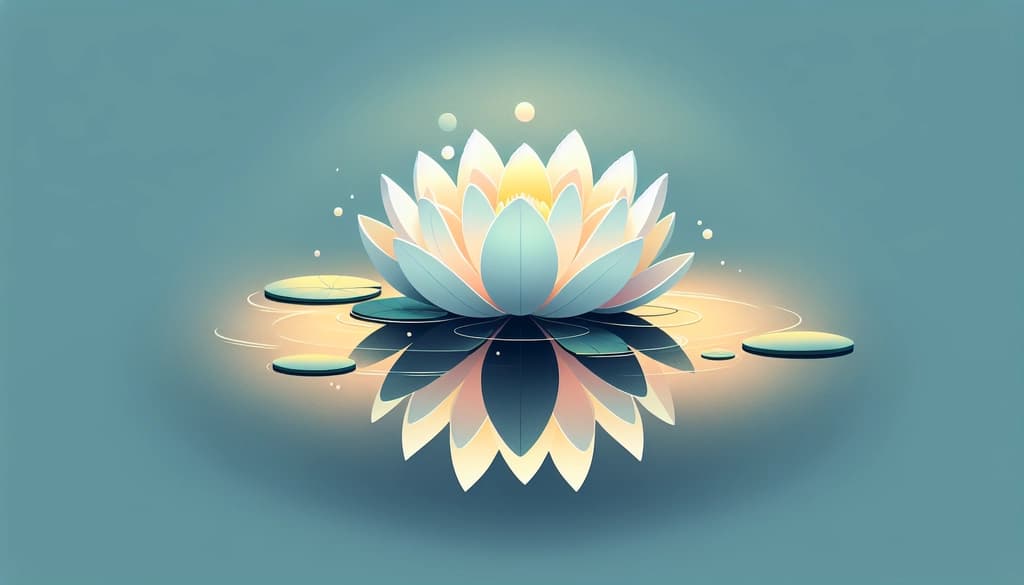
Sometimes we feel mired—rooted in the mud of daily worries or old griefs, searching for clarity above the surface. In these moments, an ancient image returns again and again: the lotus, rising slow and silent from darkness toward the open air, its petals untouched by the waters below. Why do yoga and Vedanta so often return to the lotus when speaking of consciousness or self?
Mud, Water, and Sunlight: The Lotus as Inner Journey
We are each like the lotus—rooted in the substance of life, sometimes muddied by confusion, suffering, or desire. And yet, something in us seeks light. In yogic imagery, the body is often compared to the lake; our deeper potential, to the unopened bud. The journey from seed to flower is a meditation on transformation: the possibility that clarity, wisdom, or awakening can emerge, not despite the mud, but because of it.
- Notice how the lotus sits effortlessly on water—rooted, yet free
- Imagine the petals—each one an aspect of your awareness gently unfolding
- Breathe with the sense that what is murky, too, can nourish what becomes luminous
The Lotus in Yogic Symbolism: Chakras and Self
If you’ve sat in meditation or gazed at yogic art, you've seen the lotus shape blooming at each chakra—a reminder that inner growth unfolds through layers, from roots to crown. In yoga, the thousand-petaled lotus at the top of the head is called sahasrara, a symbol for the ultimate state where consciousness opens into boundless sky. The image is not a command to rise above life, but an invitation to be nourished by every part of it, just as the lotus needs mud and sun alike.
Sometimes, understanding the symbolism more deeply means exploring the key Sanskrit terms in sacred imagery that appear throughout yogic and Vedantic texts, each one offering a facet of the meaning behind the lotus.
Vedantic Wisdom: Why the Self Is Like a Lotus
Vedanta, the philosophy woven through Upanishads and later teachings, borrows the lotus as a symbol for atman—the true Self. Here, the lotus is untouched by what surrounds it. Water slides from its petals, just as the world’s joys and sorrows may come and go, leaving the essential Self unscathed. The Bhagavad Gita calls us to live "like a lotus leaf, untouched by the water,” inviting us to move through daily action and feeling with a root in something unchanging and whole.
If you look deeper, you’ll find Vedantic interpretations of sacred symbolism reveal how the lotus bridges teachings across traditions, weaving a common thread of transcendence through the ordinary.
- When sadness weighs you down, remember the hidden root that endures
- Let your awareness rest lightly, like morning dew on a lotus petal
- With each breath, imagine returning to what is quietly untouched within
A Living Image: Lotus as Daily Practice
In practice, lotus symbolism is less about escape and more about presence. It teaches us to soften attention, to allow each moment—pleasant or muddy—to nurture depth. The lotus doesn't rush; its opening is slow. Some days are thick with silt, and others, petals open with ease. What matters is the quiet faith that something beautiful is already reaching toward light, even now.
The connection between the lotus and Shakti reveals the dynamic, creative flow within spiritual growth—showing how potential unfolds through energy and awareness as much as through stillness.
You might even consider the role of mantra and symbol in consciousness, as the lotus is invoked not just visually but also through sound and ritual—each practice another way to open attention.
- You might pause now and feel your breath—rising from the belly, gentle and steady
- Let your next inhale be a small unfolding, without forcing
- Trust that clarity comes, petal by petal, even through what feels messy
Reflecting on how symbols inform yogic practice reveals how the lotus does not stand apart from life, but lies at its very heart, layered and luminous.
The lotus is not an image of perfection above life, but of life itself. In the language of yoga and Vedanta, it whispers: whatever stirs below, the heart can still bloom toward what is clear and quiet, even now.
FAQ
You May Also Like

Vedanta, Yoga, and Western Consciousness: Mapping the Inner Terrain
What does it mean to be aware—to really know the silent ground beneath thought and feeling? Through the quiet wisdom of Vedanta and Yoga, and the analytic gaze of Western consciousness studies, we find not just answers, but deep and living questions.

Advaita Vedanta and the Quiet Mystery of Non-Dual Consciousness
If you’ve ever sensed that the boundaries between self and world are softer than they appear, you are not alone. Advaita Vedanta invites us into the spaciousness of non-dual awareness—a truth that can be felt in the hush of dawn, or in the silent connectedness between all living things.

Resilience Practices from Yoga: Lessons Rooted in Eastern Traditions
When life’s ground feels less steady, wisdom from yoga and eastern practices offers us subtle ways to begin again, each breath drawing us back to center.

Consciousness in Classical Yoga and the Invitation of the Contemporary Mind
We meet consciousness in many forms—old as mountain stone, fresh as rain. In the space where classical yoga touches the present, what shifts, what stays, and how do we sense the living edges between tradition and now?